When a questionable practice comes to light, the misconception often arises that all tax planning is risky. However, the real problem isn’t the planning itself, but rather the tendency to confuse a sound solution with an aggressive strategy, and a true specialist with someone who simply peddles problems.
The Difference Between a Consultant and a True Tax Specialist
Today, there are many who call themselves experts simply because they are familiar with certain mechanisms. But true tax planning is a specialty that requires years of training, constant updating, and a deep understanding of both the law and the realities of business.
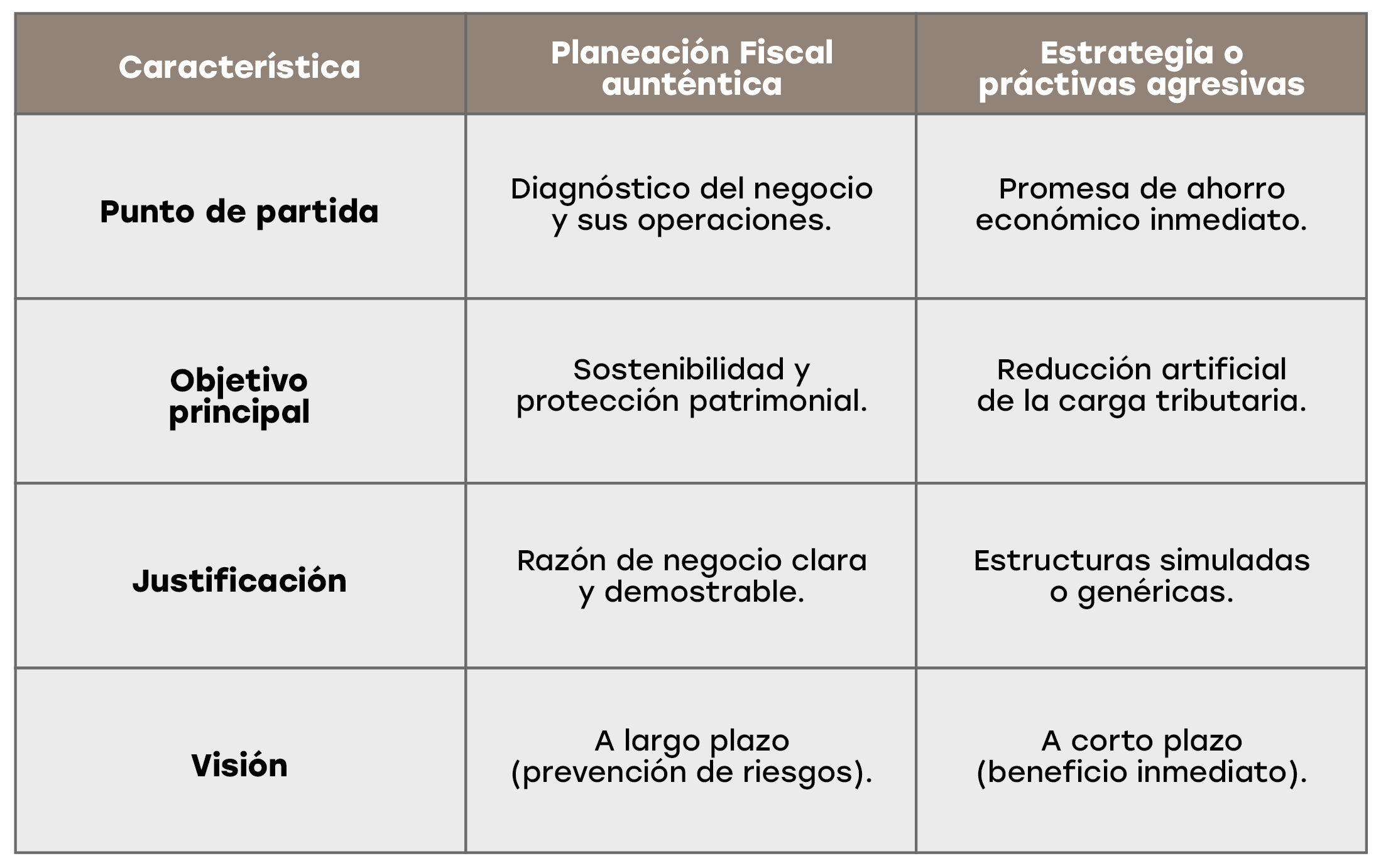
A true tax professional knows that taxes are the result of business decisions, not the starting point. For this reason, the process never begins with a pre-designed structure; it starts by understanding the company: its operations, its risks, and its goals. Only after this analysis are alternatives proposed that promote efficiency within a sound legal and financial framework.
Beyond "Paying Less Tax"
Legitimate tax planning is not intended to evade taxes, but rather to help companies make better decisions. Its goal is to strengthen the corporate structure, protect assets, and optimize operations; tax efficiency is merely a natural consequence of this.
The best plans rarely start by talking about savings; they focus on processes, risks, and sustainable growth. If the only selling point of a proposal is the money it promises to save, it’s probably not a real plan.
The Filter Every Company Needs
That is precisely why your company’s security depends on prevention. Taking the precaution of vetting your advisors is a basic risk control measure: a true tax specialist seeks to safeguard your business operations, while a “strategy salesman” is only after immediate financial gain. Choosing a partner based solely on the savings they promise—without questioning their legal integrity—is the quickest way to invite trouble with the authorities. Ultimately, the true value a specialist can provide you today isn’t measured in pesos, but in the peace of mind with which your company will operate tomorrow.